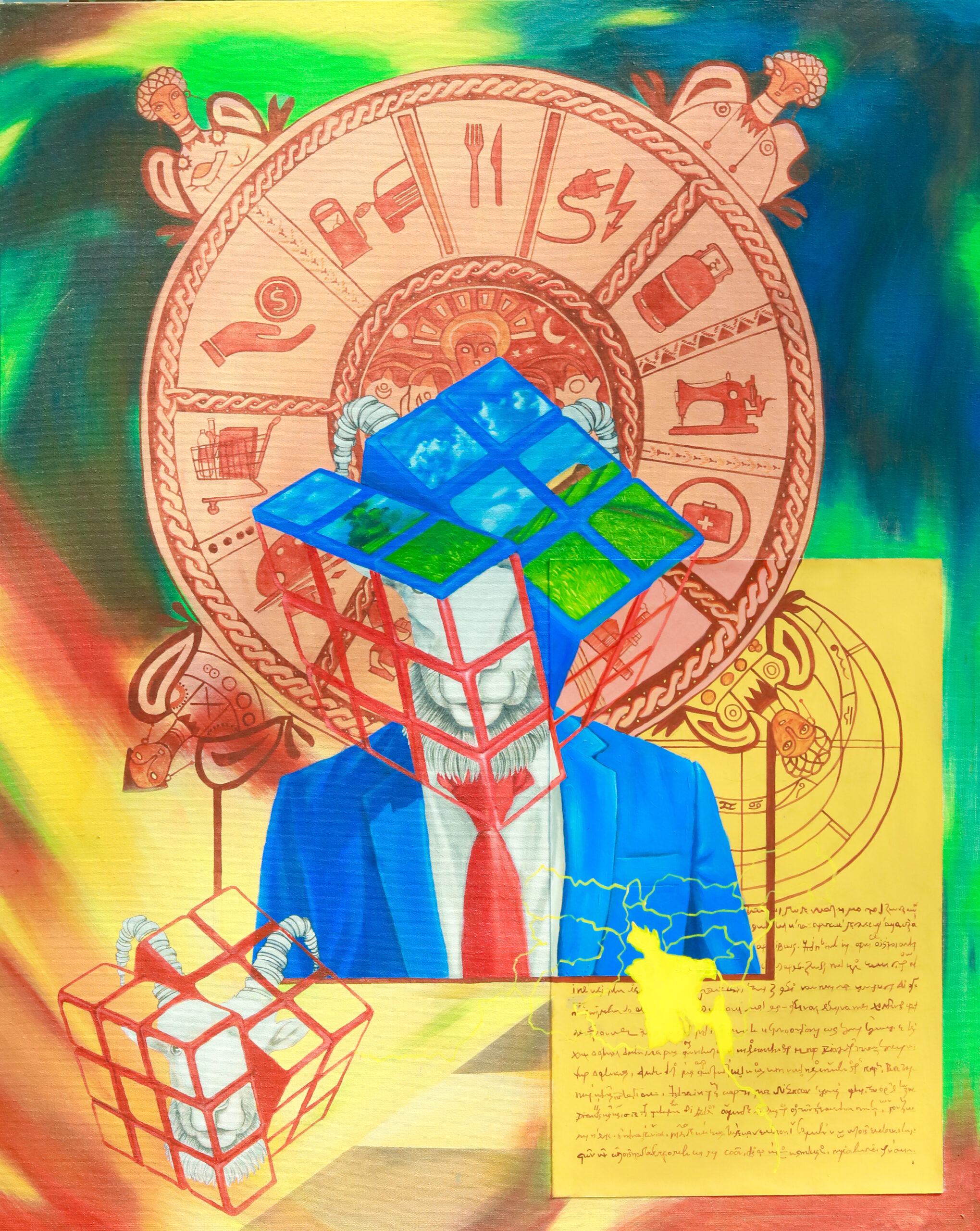
In Disrupted Destiny, Md. Faim Islam explores the social, political, and cultural unrest of Bangladesh through the metaphor of a fragmented puzzle. The puzzle becomes both a structural and philosophical device—its incomplete and unresolved pieces reflecting the nation’s ongoing crises. By replacing his own face with an entangled puzzle, the artist makes himself the model of collective uncertainty and disorder.
The unresolved pieces reveal glimpses of a lush, fertile, and beautiful Bangladesh, yet these fragments cannot align due to the weight of structural problems—economic recession, power shortages, energy crisis, collapse in the garments and industrial sectors, and inflation of daily necessities.
Within the composition, the artist integrates zodiac signs from the Harappa and Mohenjo-daro civilizations, symbols of ancient spiritual belief and destiny. However, instead of traditional celestial signs, he substitutes them with markers of contemporary crises—suggesting that our fate is no longer dictated by stars but by political and institutional failures.
The map of Bangladesh and a document of urban planning from the Harappan period symbolize both the continuity and fragility of civilization. Meanwhile, the figure in a blue coat alludes to Western influence, complicating the nation’s internal instability.
Ultimately, the painting articulates a paradox: if the problematic pieces of the puzzle are removed, a harmonious and flourishing Bangladesh can re-emerge. The work becomes a philosophical inquiry into resilience, identity, and the hope for restoration amidst fracture and disarray.